Socrates.AI
Founding Head of Design
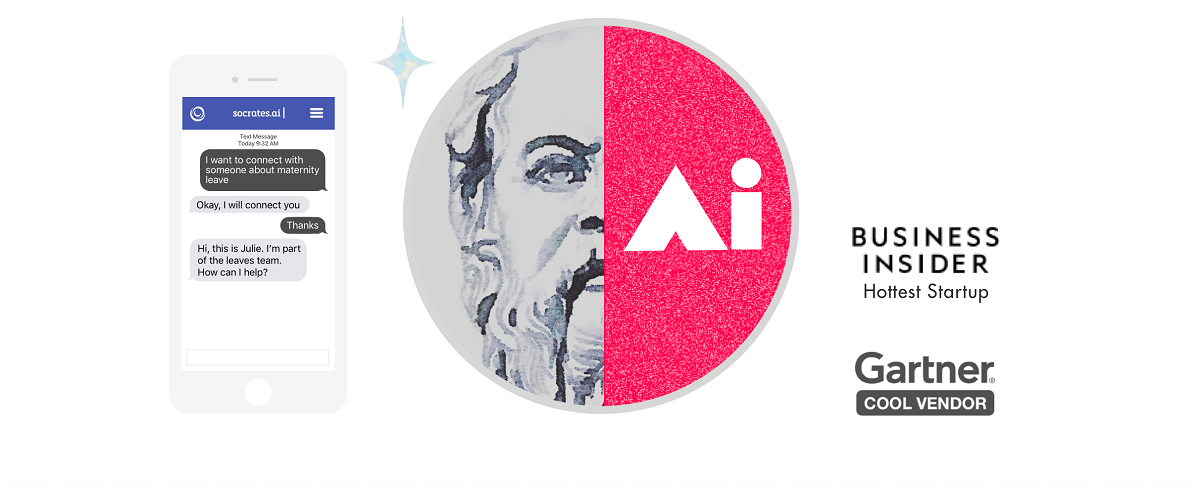
While I was at Espressive, a VC on our board asked me to look at another company in the portfolio, Socrates AI, an HR and employee-engagement assistant for the enterprise. The engine was real. The story wasn’t. Customers who used it liked it; nobody outside could say in a sentence what it did. I came in as the first design hire, reporting to the CEO and the board, to fix the story and then the product.
Making it legible
The first work wasn’t screens. I sat with sales and rewrote the value proposition until a prospect could repeat it back, then redesigned the website around it (two versions in a year), built the sales and board decks, and moved product management from a waterfall plan to a shipping cadence customers could see.
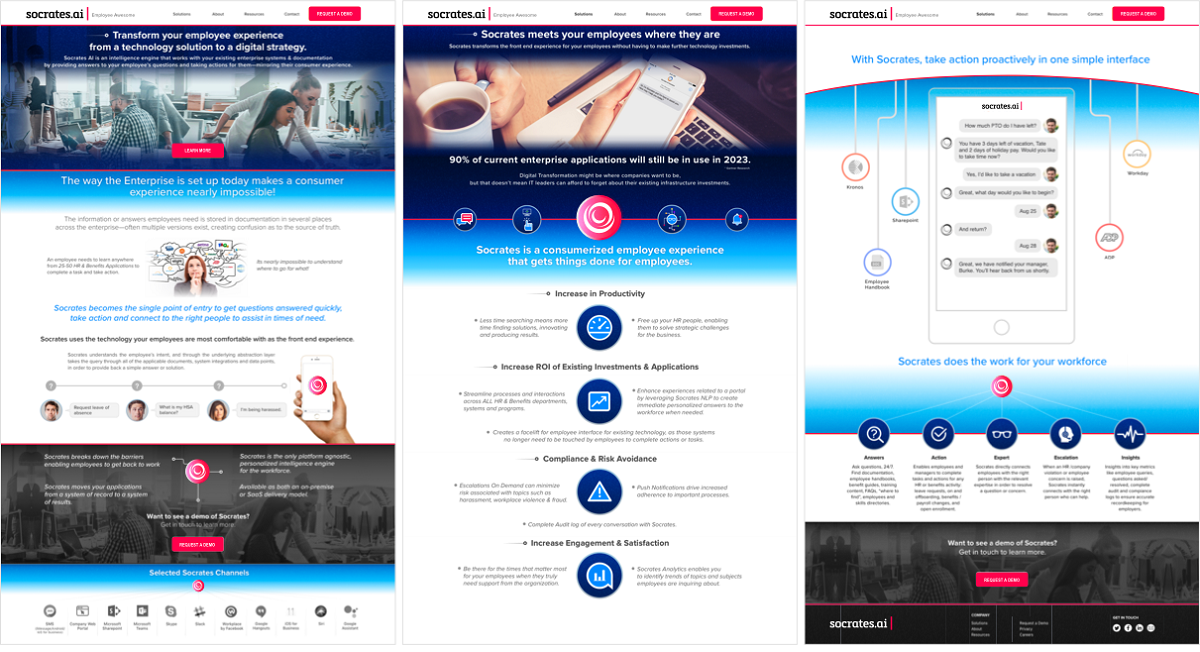
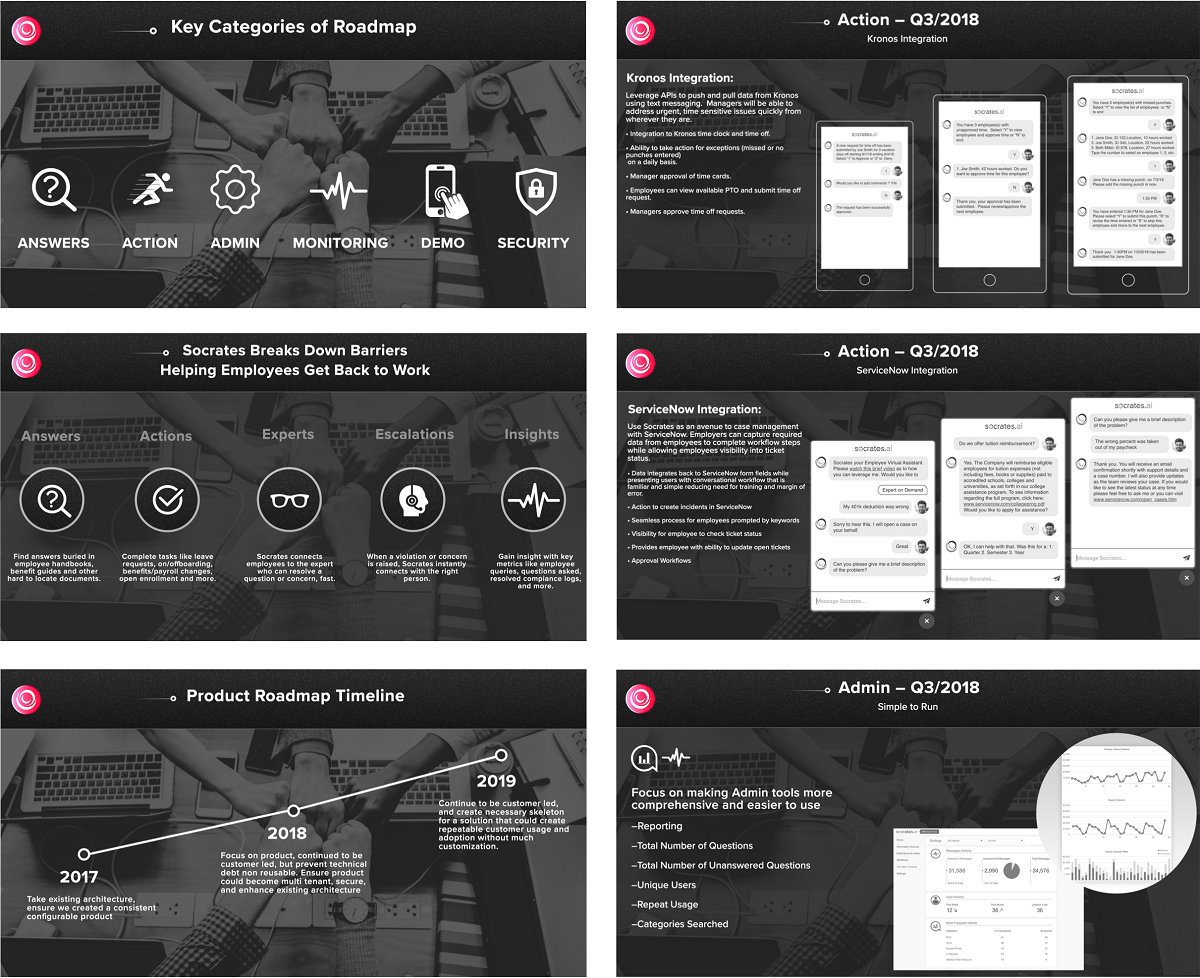
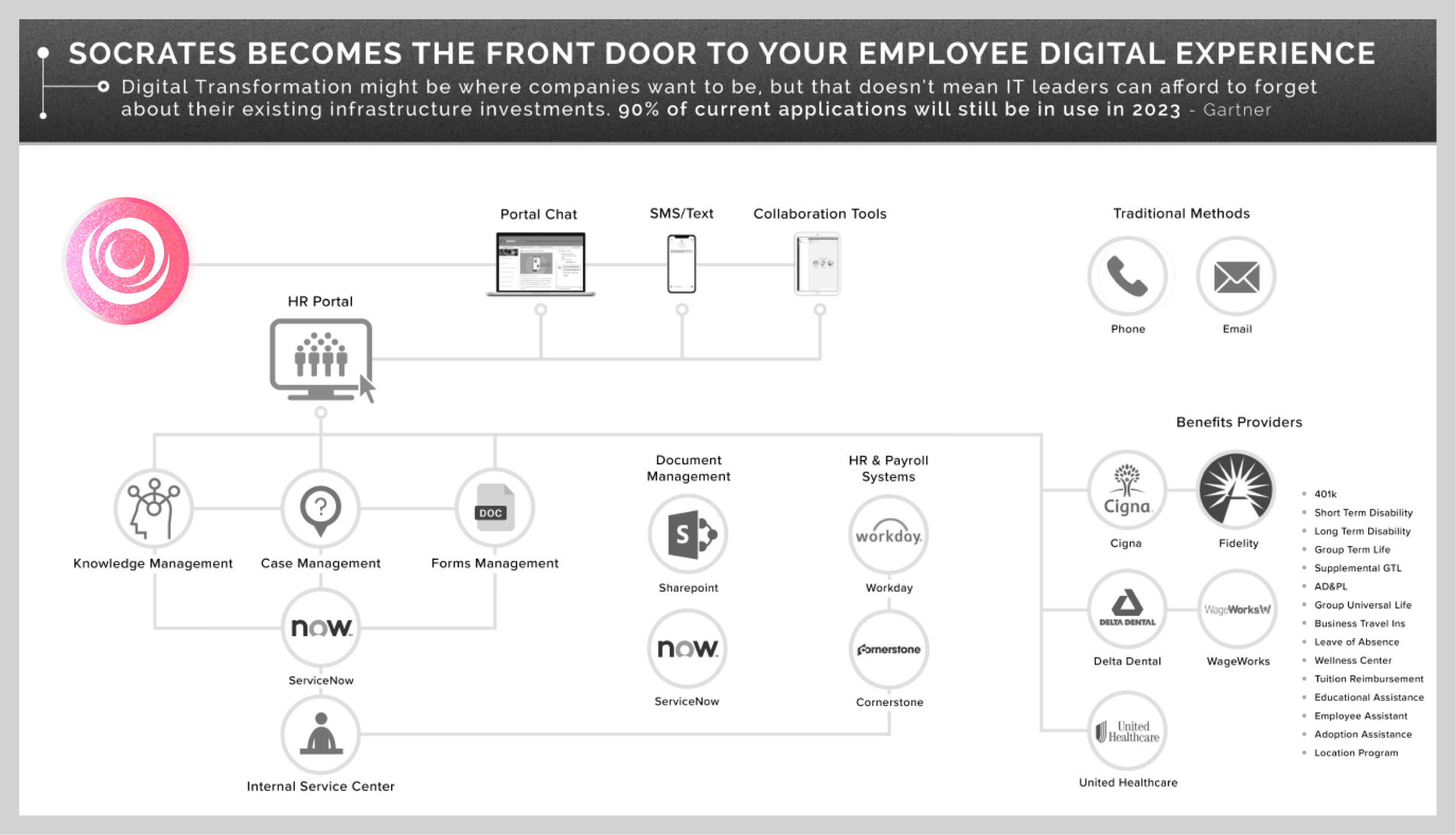
Naming, brand, personality
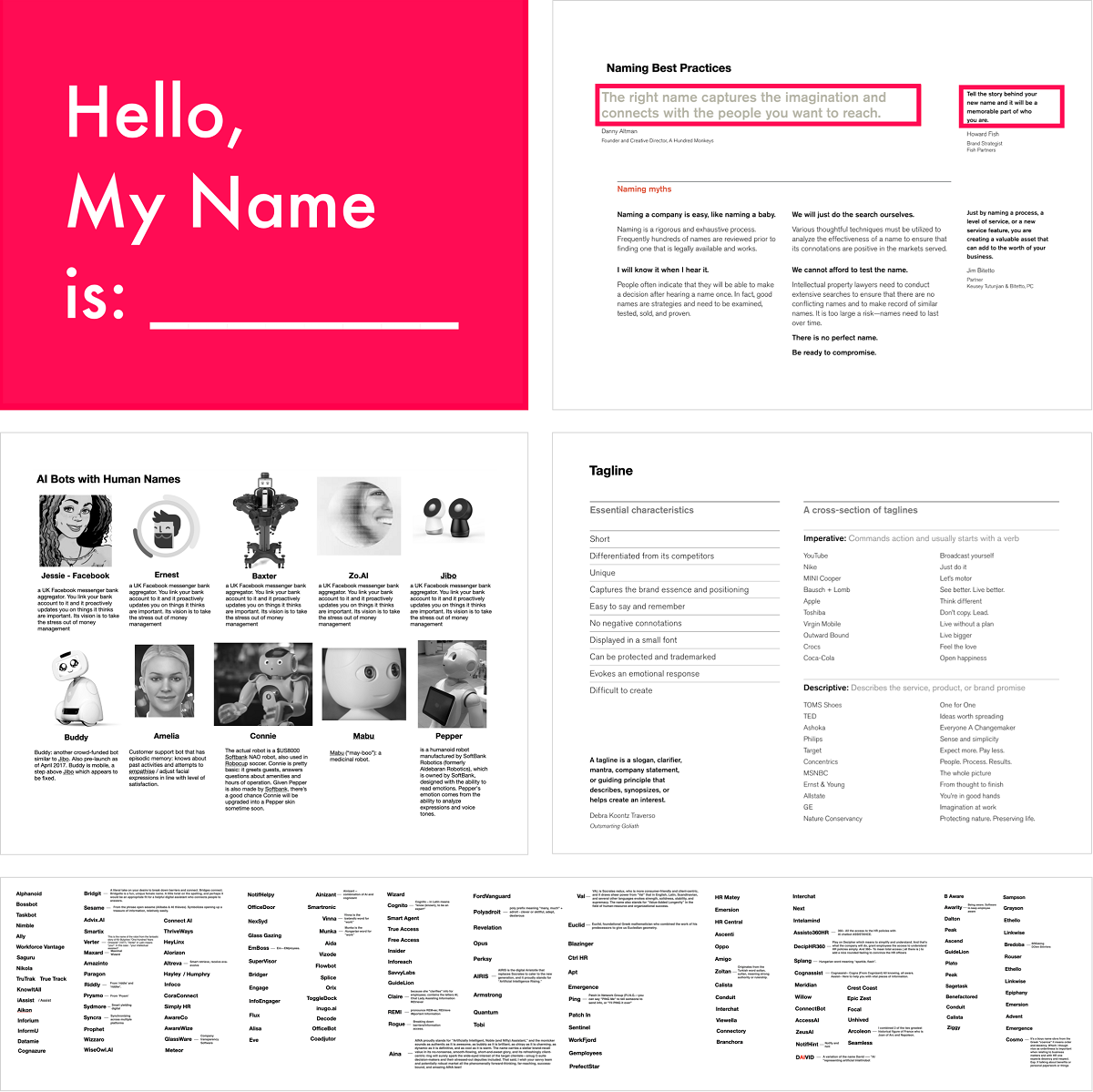
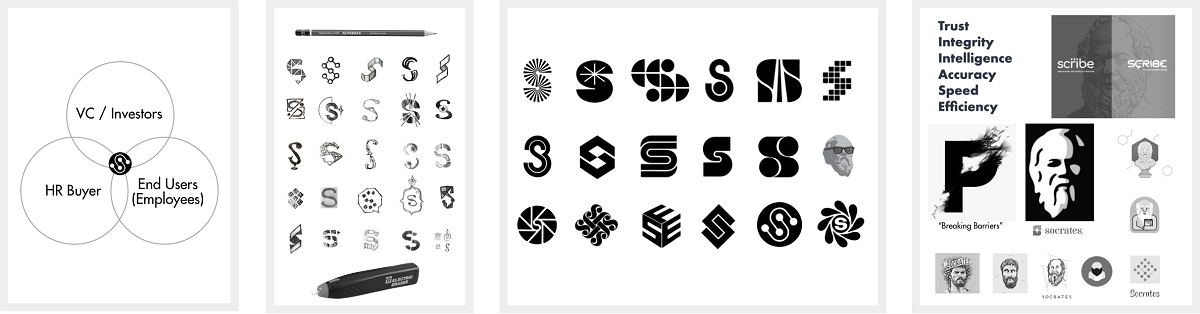
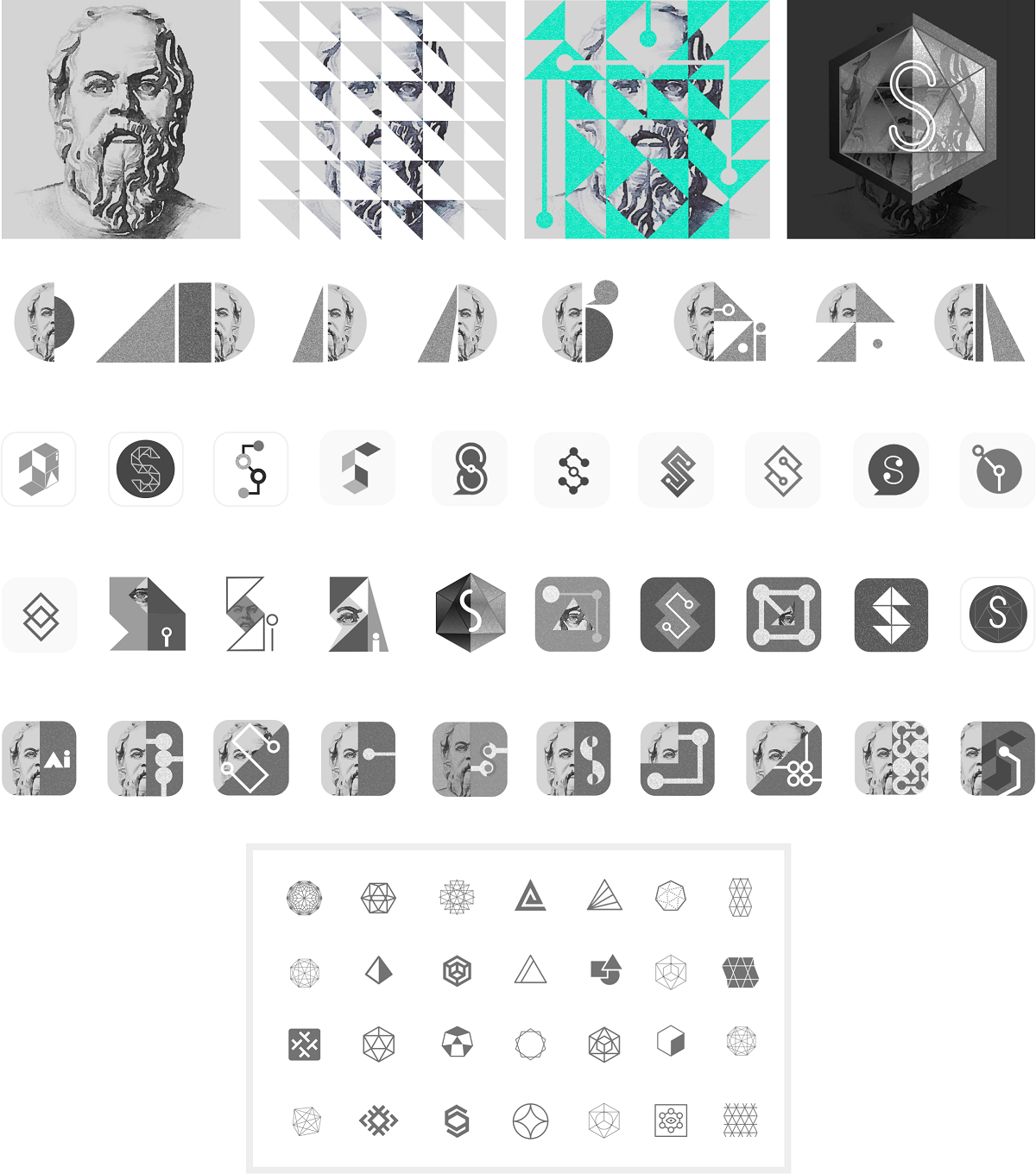
Socrates was a good name with a bad logo. I kept the name, rebuilt the identity, and wrote the assistant’s personality: curious, plain-spoken, never pretending to be a person. An enterprise assistant that flatters you is a liability; one that asks the right next question is Socrates.
The product, v1
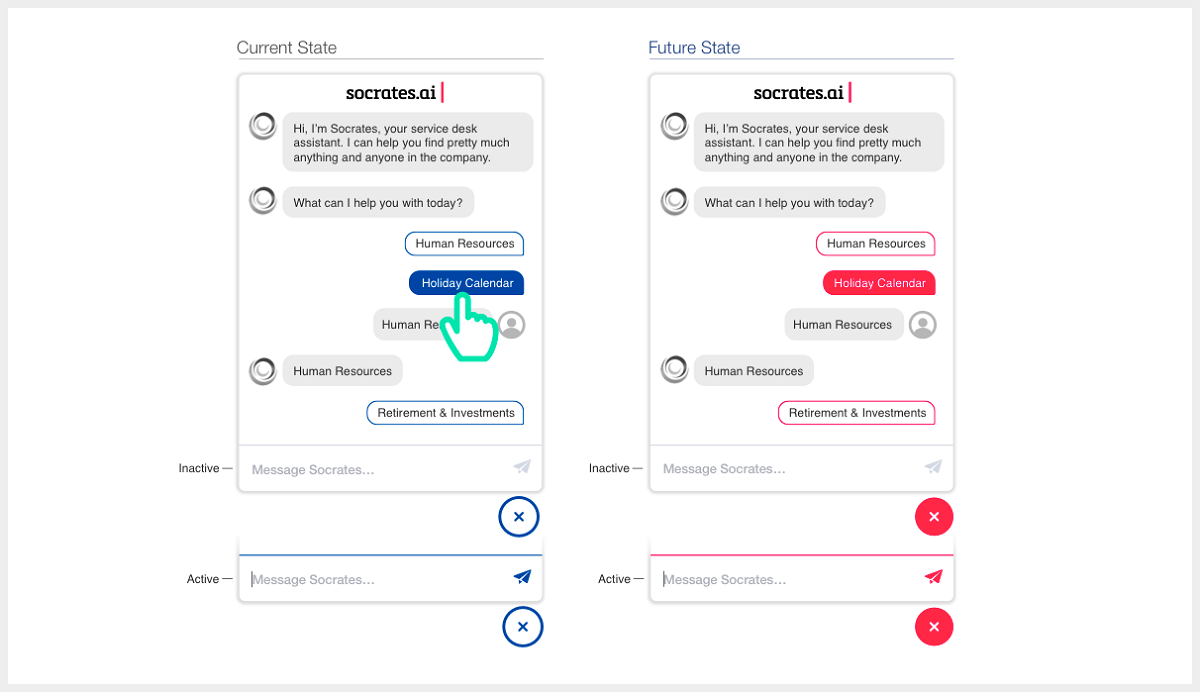
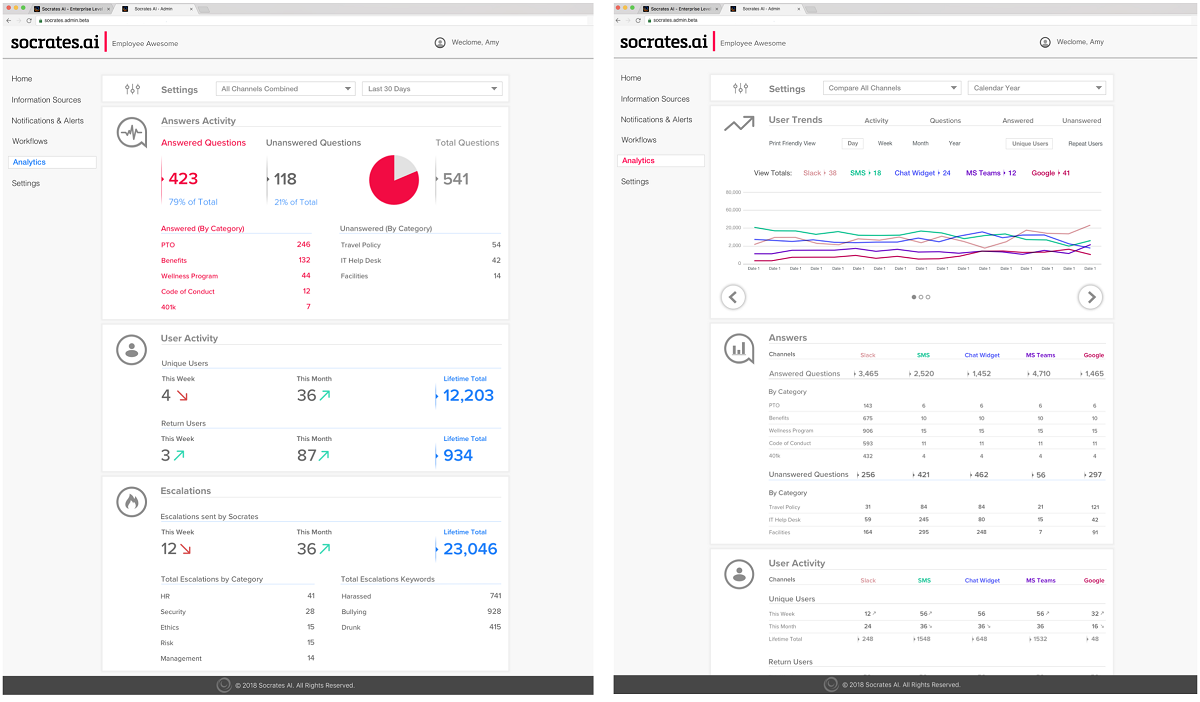
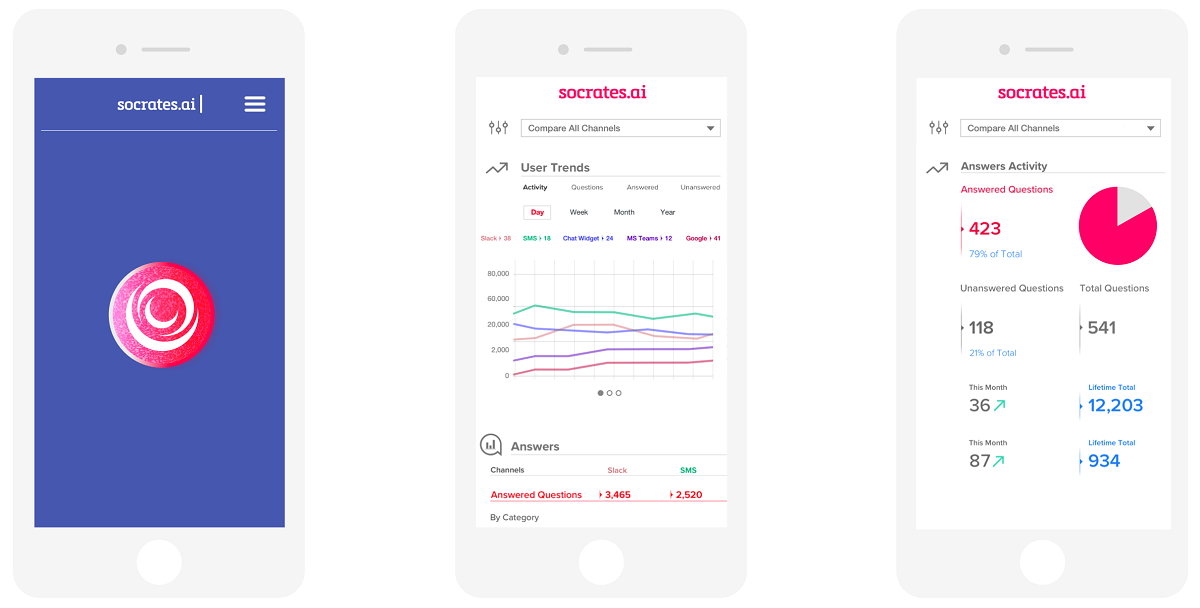
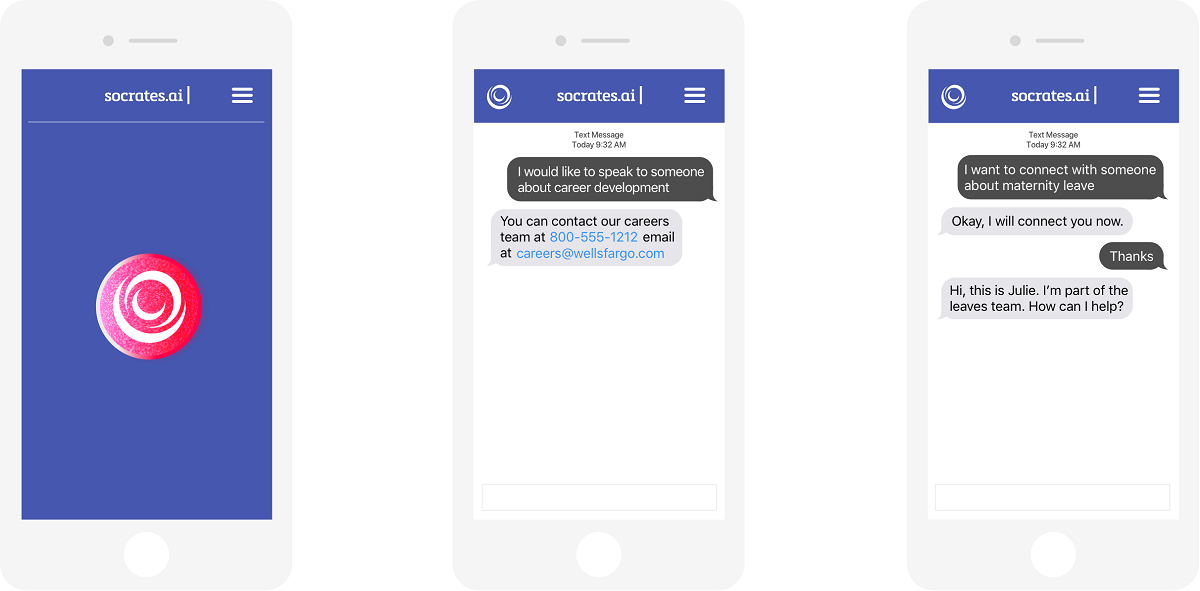
Then the interface. The chat surface, the mobile and web admin panels, and the routing model that let an HR team see what employees were asking without reading every message.
What happened
I came in through the board, into a company with a strong engine and a story nobody outside could follow. I rewrote the value proposition with the sales team, redesigned the website around it, and shipped a run of improvements to the core product that customers noticed and said so. The company was later merged into Simppler (2023). The lesson I took from it is in most of my work since: an enterprise AI product is a trust problem before it’s a UI problem, and the design job is deciding what the person sees when the system is doing something on their behalf.