Cricket Mobile and Muve Music
Moving the needle on a truly innovative digital music service.
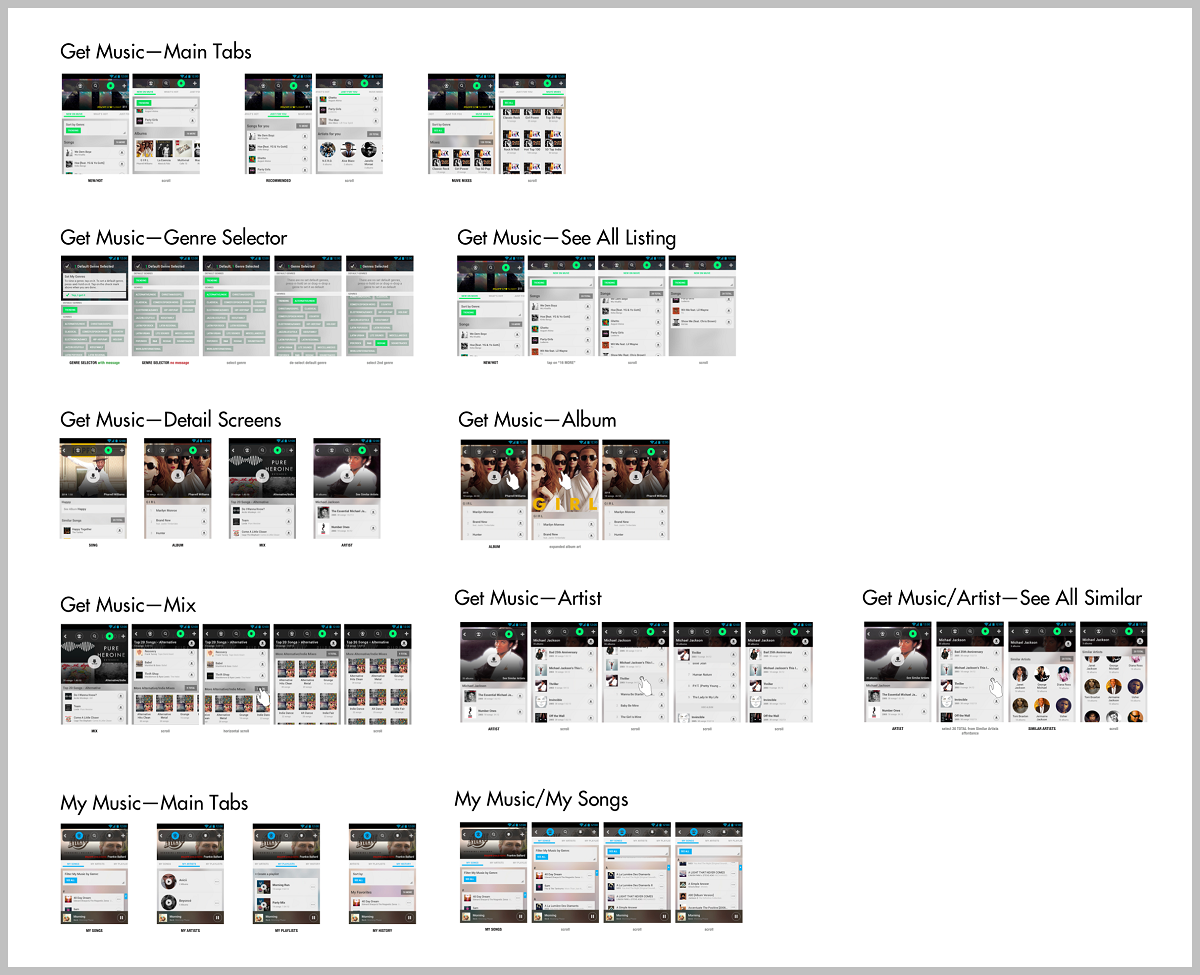
Android & iOS redesign of the +2 million-user Muve Music app.
From the ashes of failed music startup Beyond Oblivion came an even more challenging opportunity, by way of an established player in the mobile industry: Leap Wireless (Cricket Mobile). The core team Beyond had assembled were experts in digital music — having worked at Apple and Rhapsody — and due to the implosion of Boinc just before the holidays, our team happened to be free at exactly the moment a similar product, Muve Music, was in serious crisis and needing a plan B.
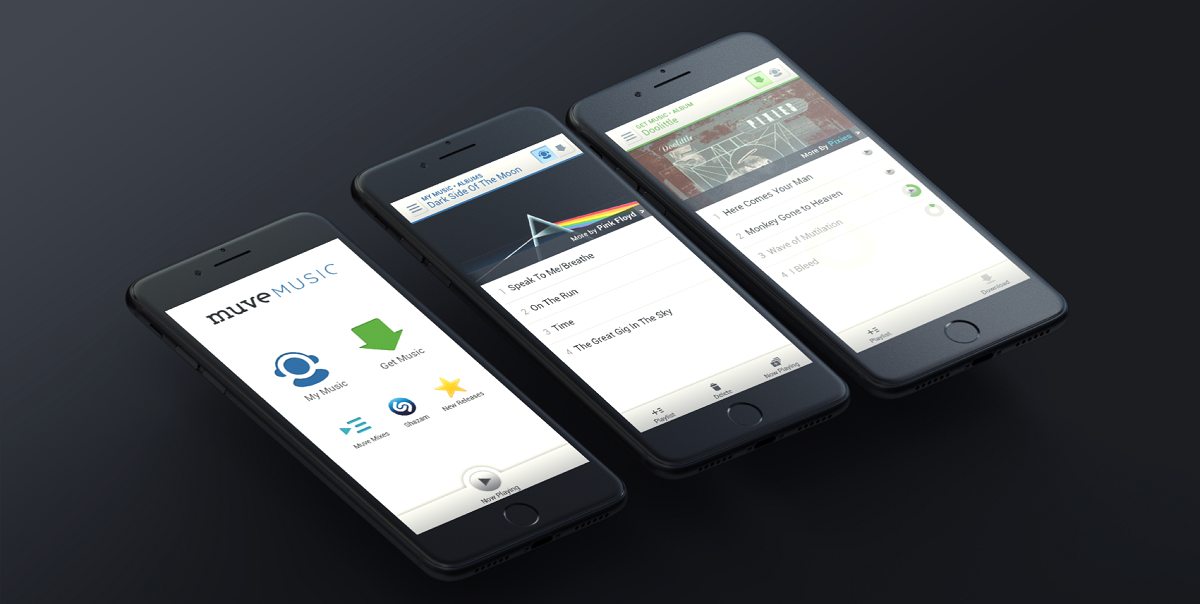
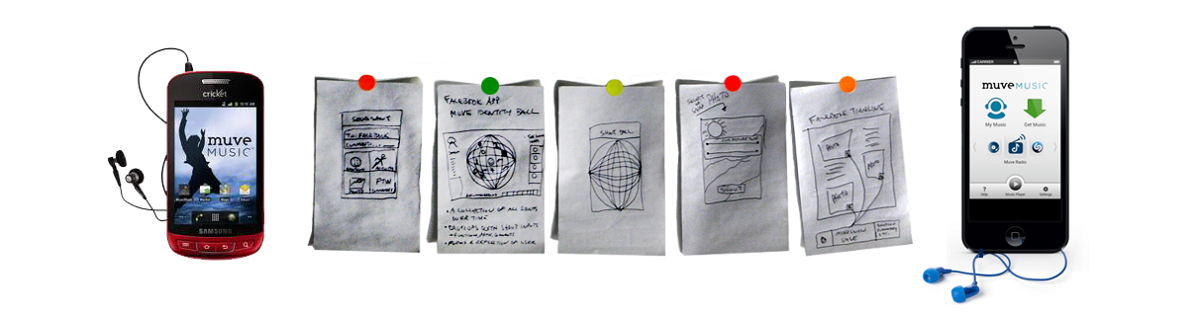
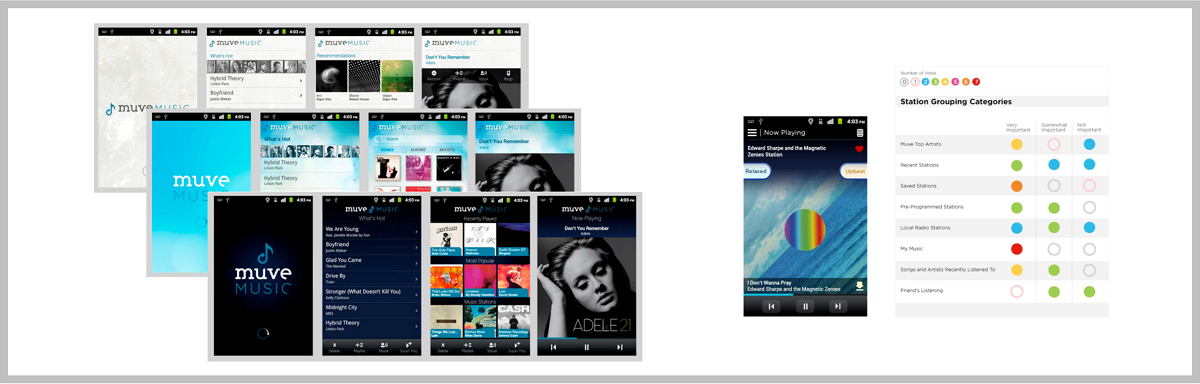
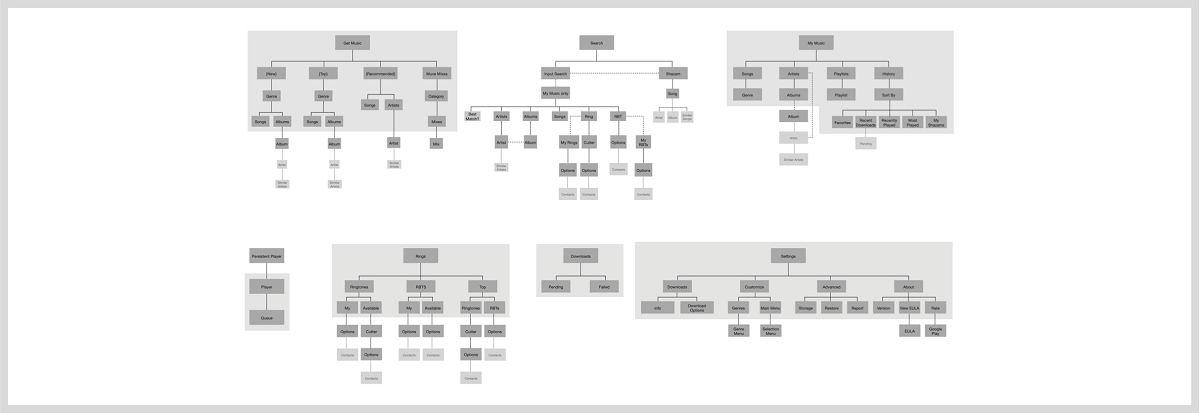
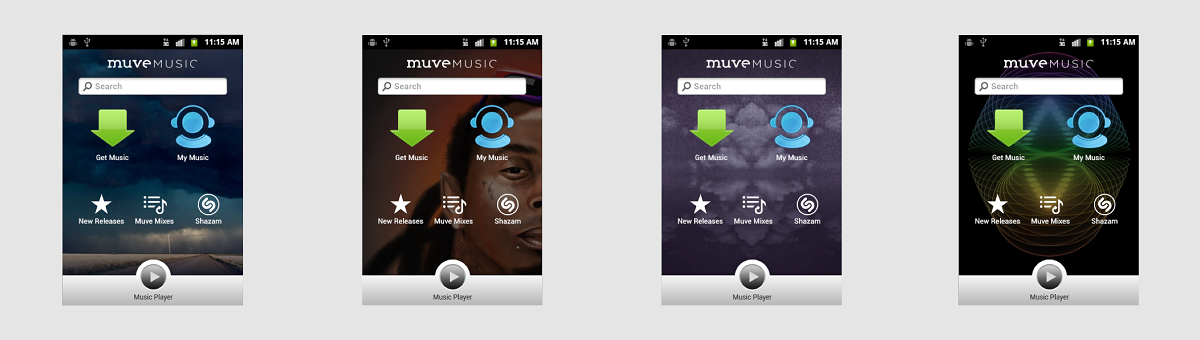
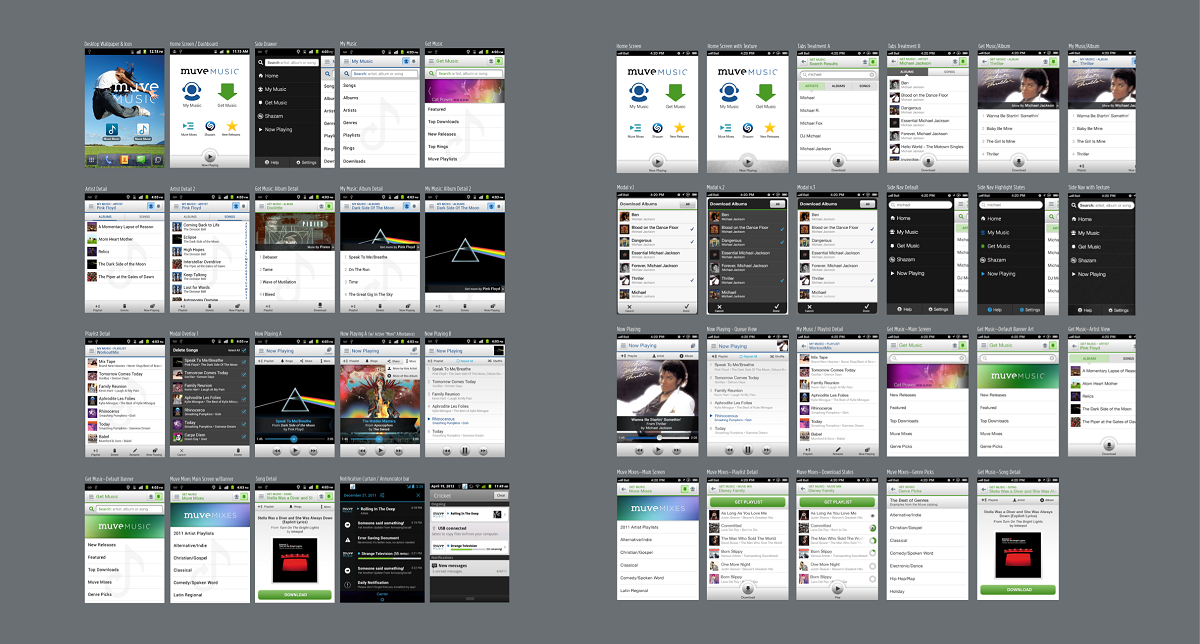
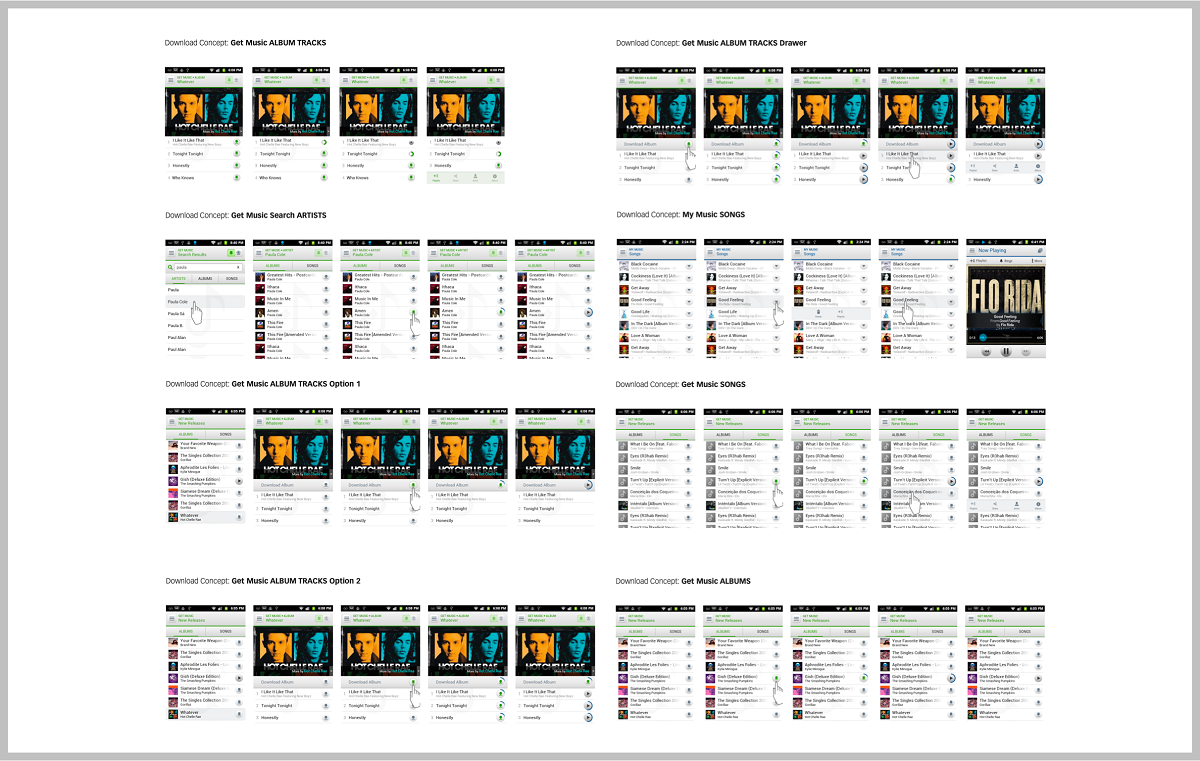
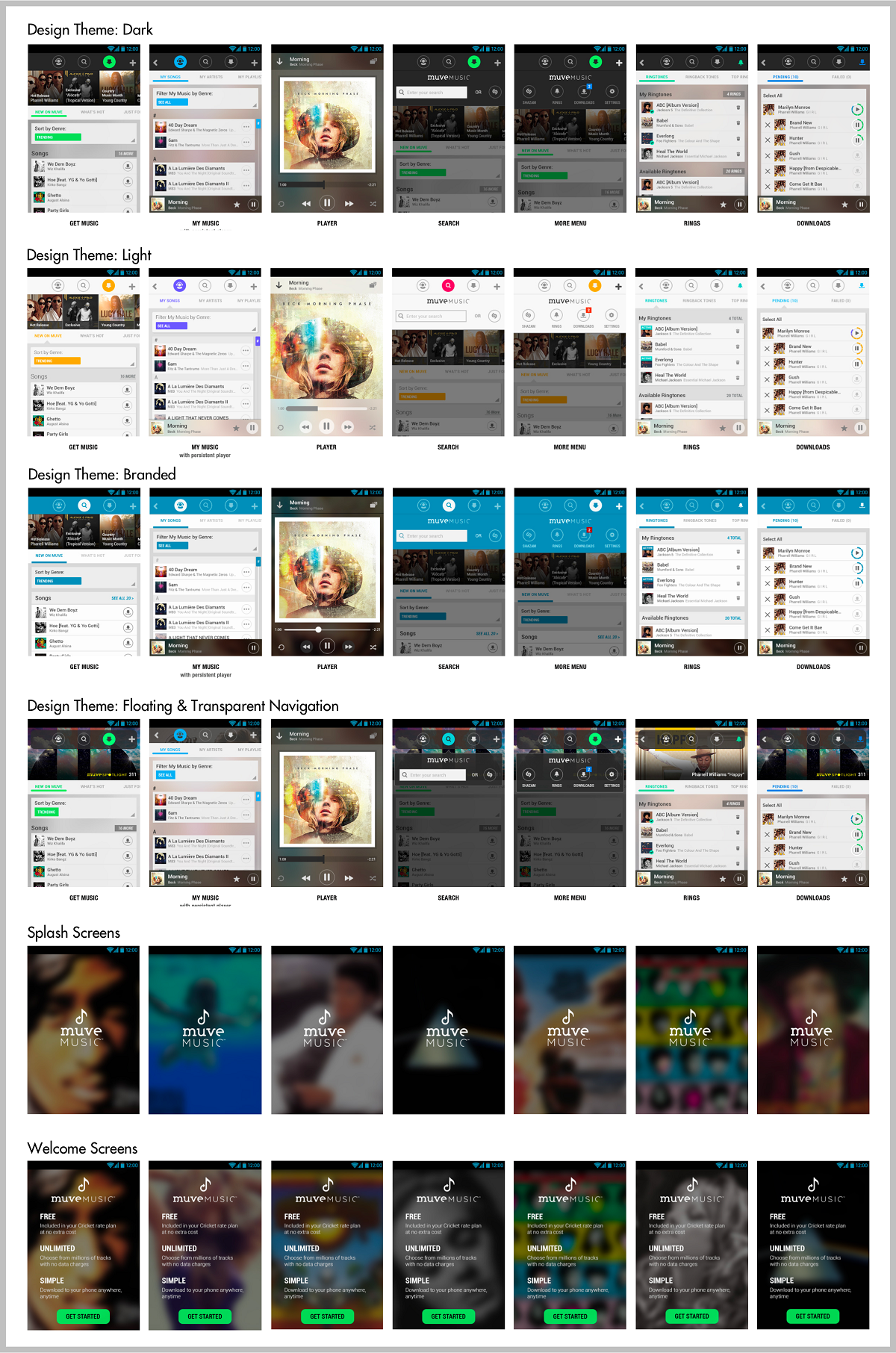
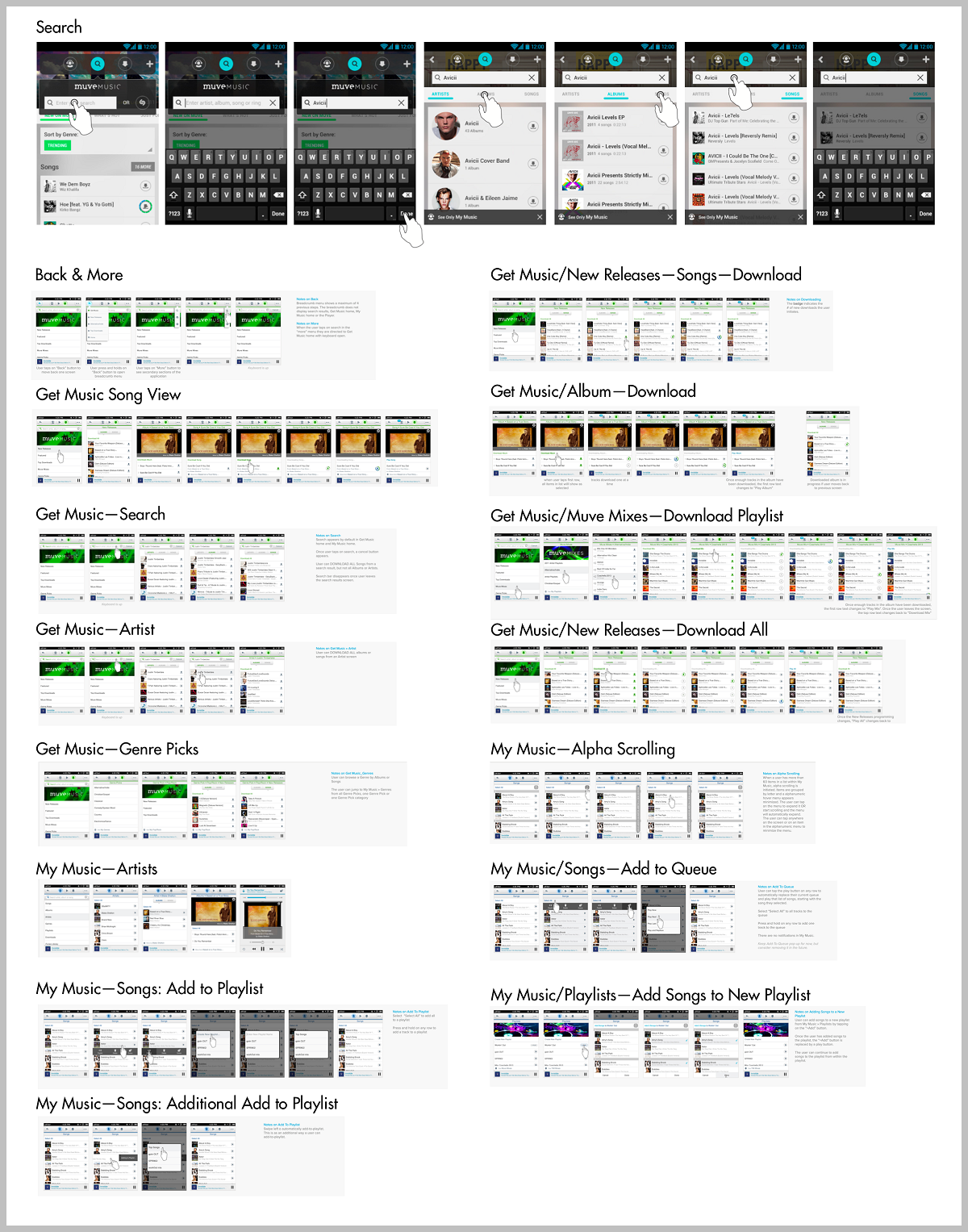
Leap Wireless developed the Muve Music subscription service for its Cricket Wireless pay-as-you-go carrier. Packaged free with mobile plans, Muve was one of the most popular music subscription services in the country, with roughly 1.6 million subscribers. In 2012–2013 I was the creative UX director for One Step Beyond Consulting, set up to work exclusively for Muve Music. Our team prototyped and tested new features, brand directions, and radically redefined the UX and visual design of the flagship Android experience.
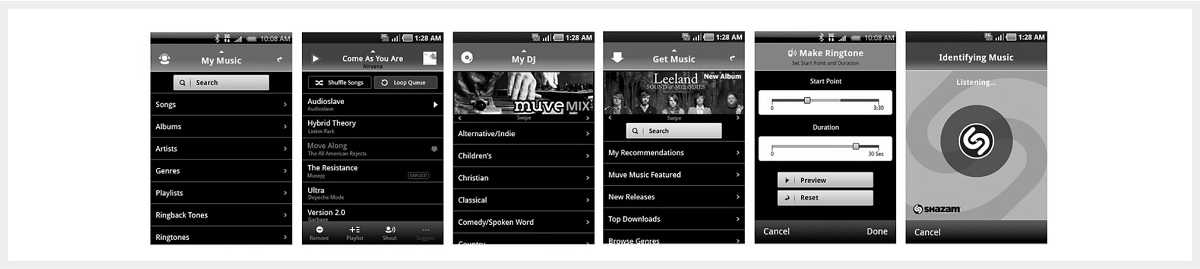
Muve began as an experiment incubated within Cricket to move the needle on a few business metrics. It quickly became hugely relevant — but with an unforeseen cost: it was never architected to scale, and as it grew popular it crippled Cricket’s network. While engineering rebuilt the infrastructure, the design team built a completely new interface for the core app and a new radio feature.
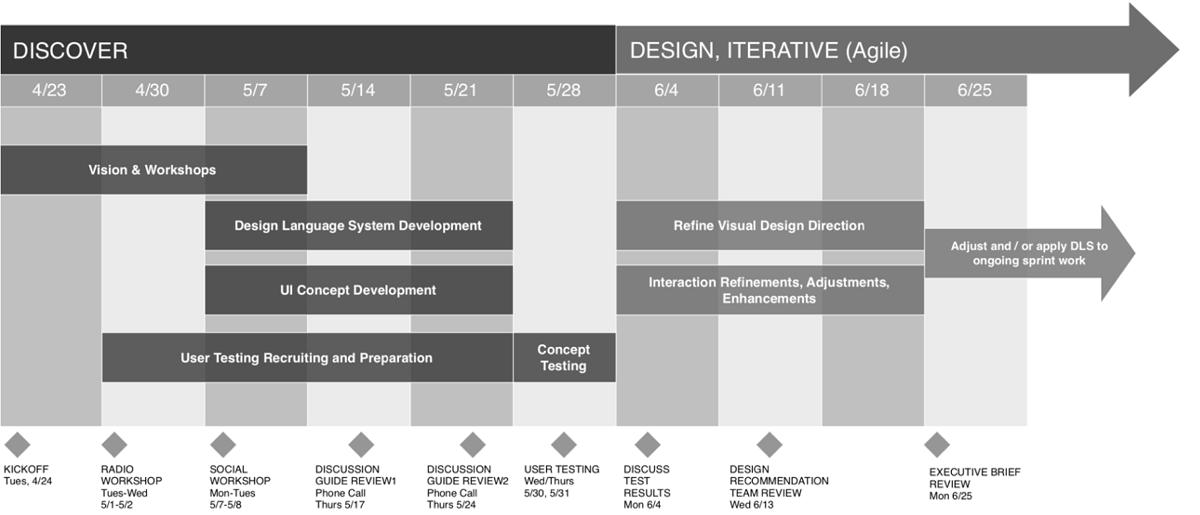
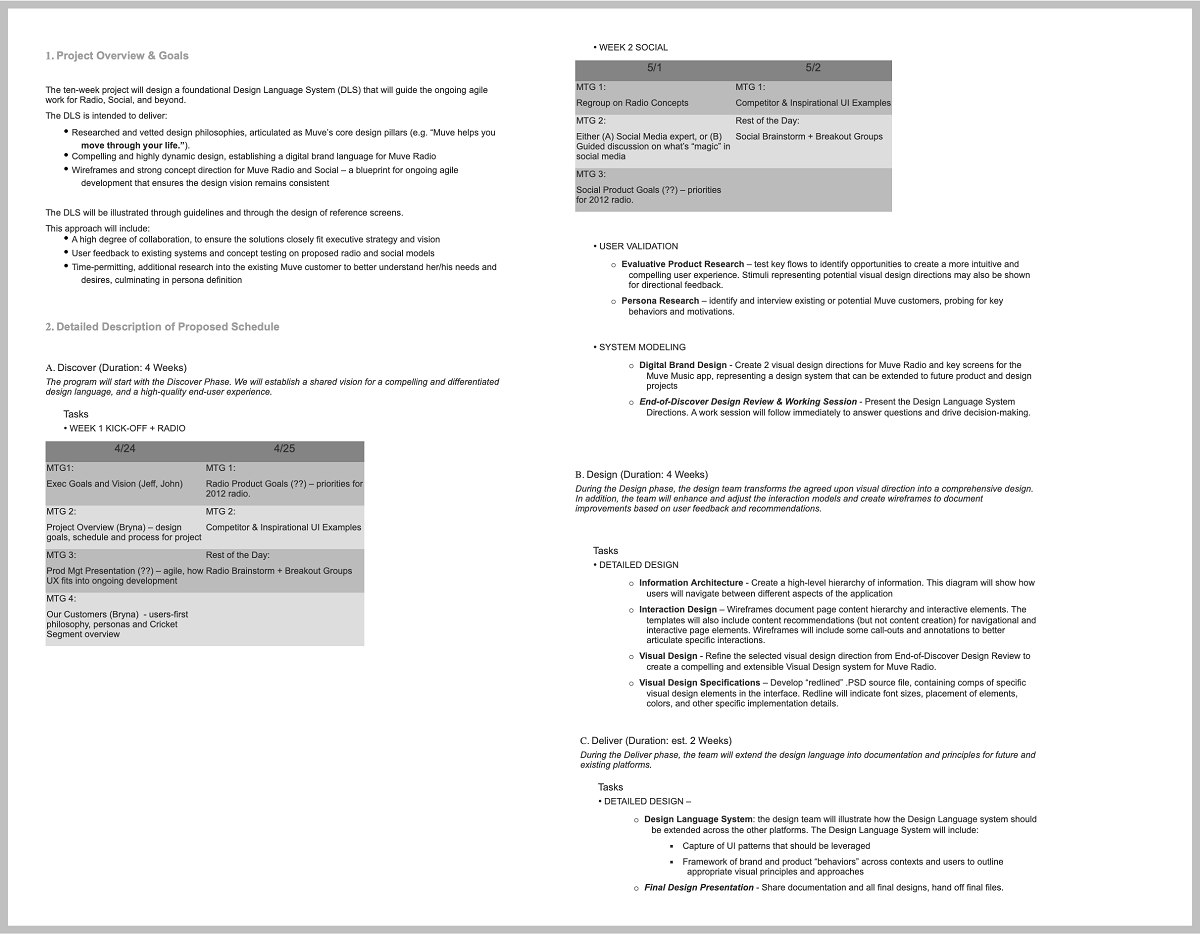
Moving the Needle on a Truly Innovative Music Service
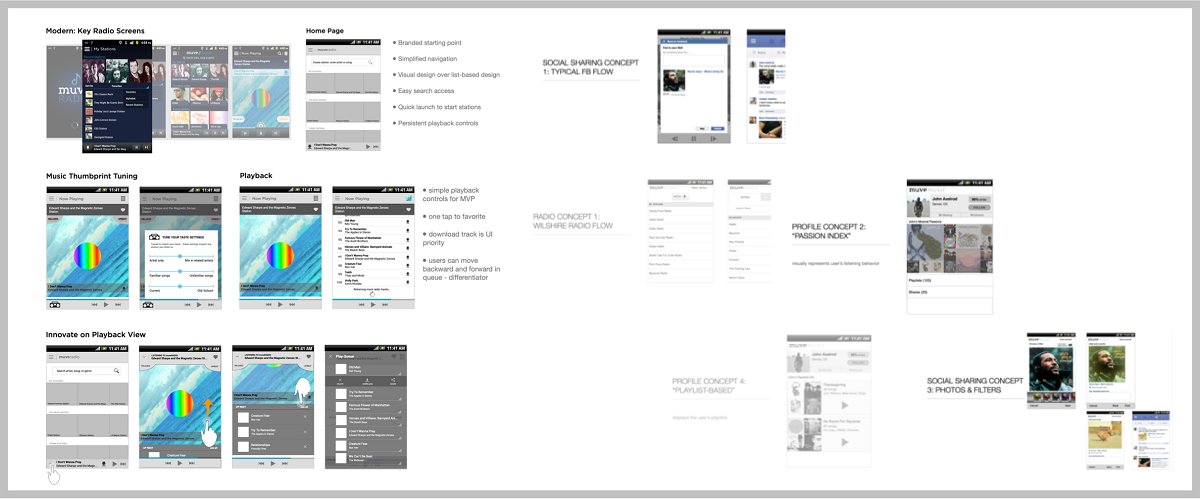
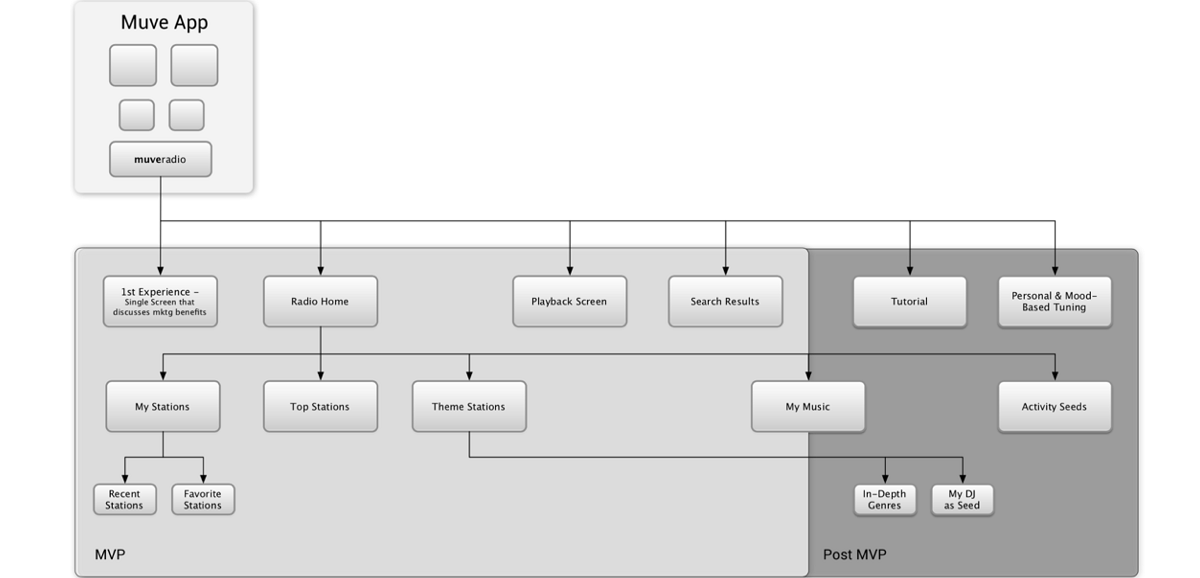
In 2012 Muve was a new business model — embed the cost of an unlimited download service in your monthly phone bill. The service had 2M+ paying subscribers when the Muve team enlisted One Step Beyond to help grow and evolve Muve into a free-standing service. We were tasked with understanding the opportunities around radio and social, and moved quickly — mapping a strategy that resulted in Muve’s acquisition by AT&T.
Discovery Phase
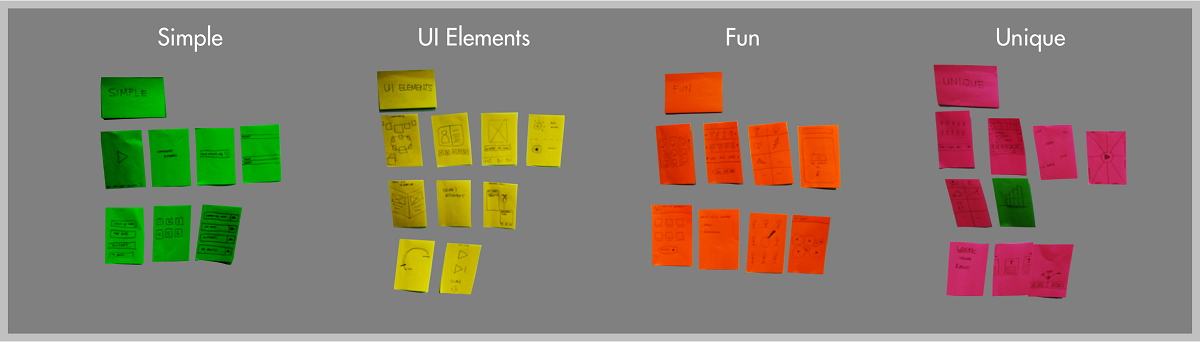
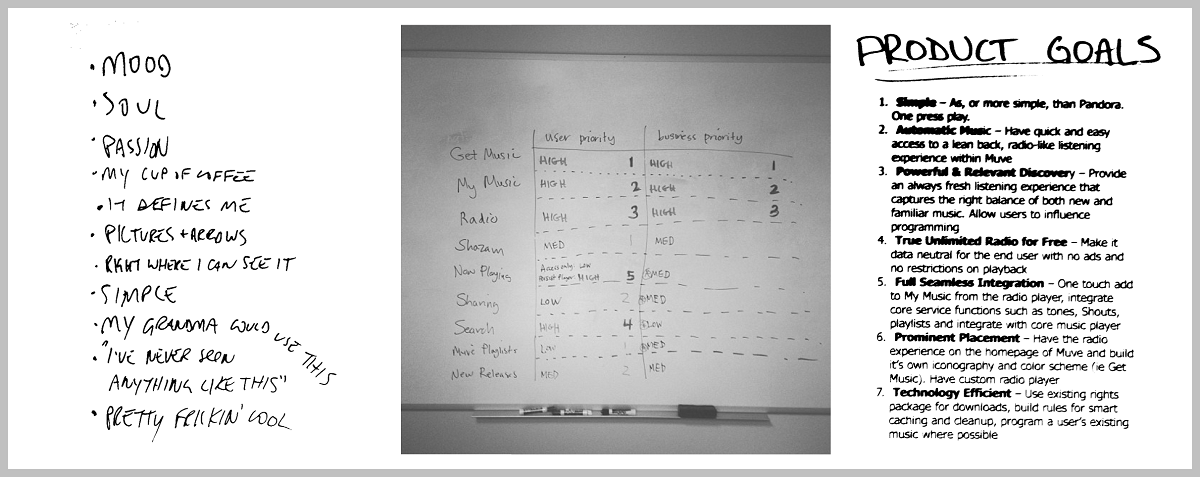
My team met for several off-sites to workshop ideas and engage leadership with the design process. This refined the key goals of the product and established an easy rapport with all stakeholders.
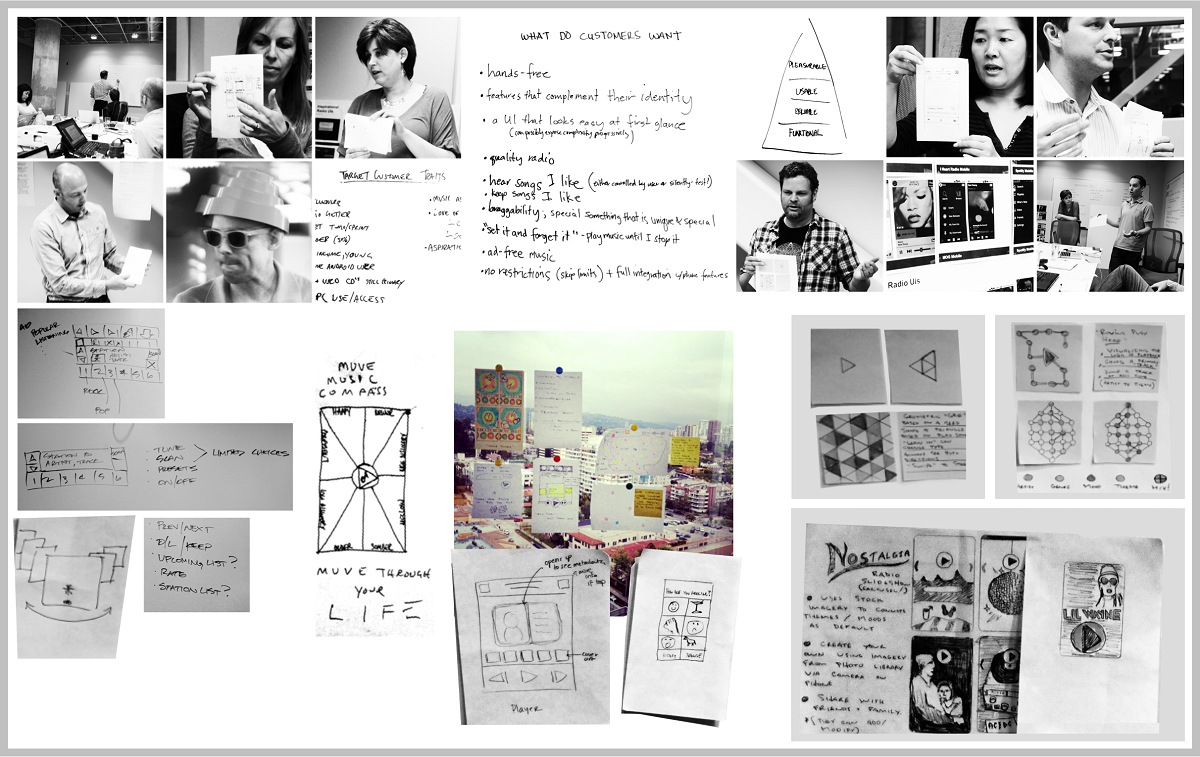
Primary Research
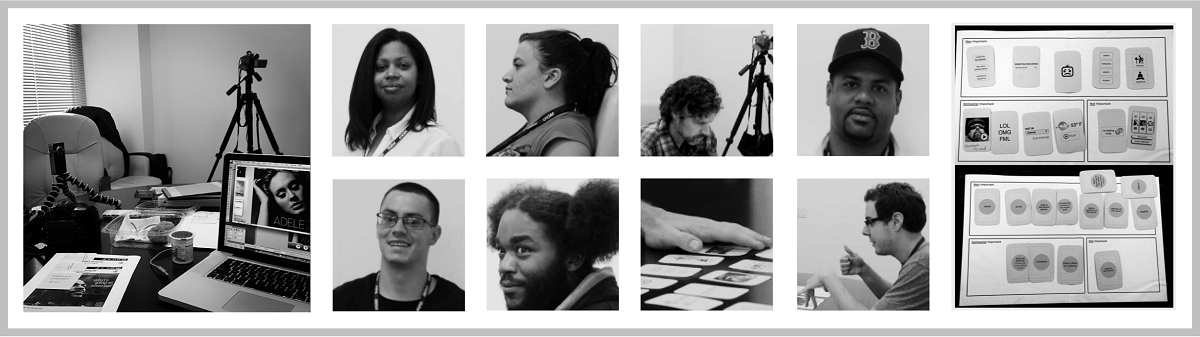
We interviewed existing Cricket customers (Muve and non-Muve subscribers) to vet our ideas — discussing radio and social music, and using card sorting to rank feature importance.
Conclusion
Muve grew to over 1,000,000 subscribers by 2013 and was then spun off as its own brand. The service was acquired by AT&T in 2014.
Muve 4.0 for Android and iOS
Company Culture
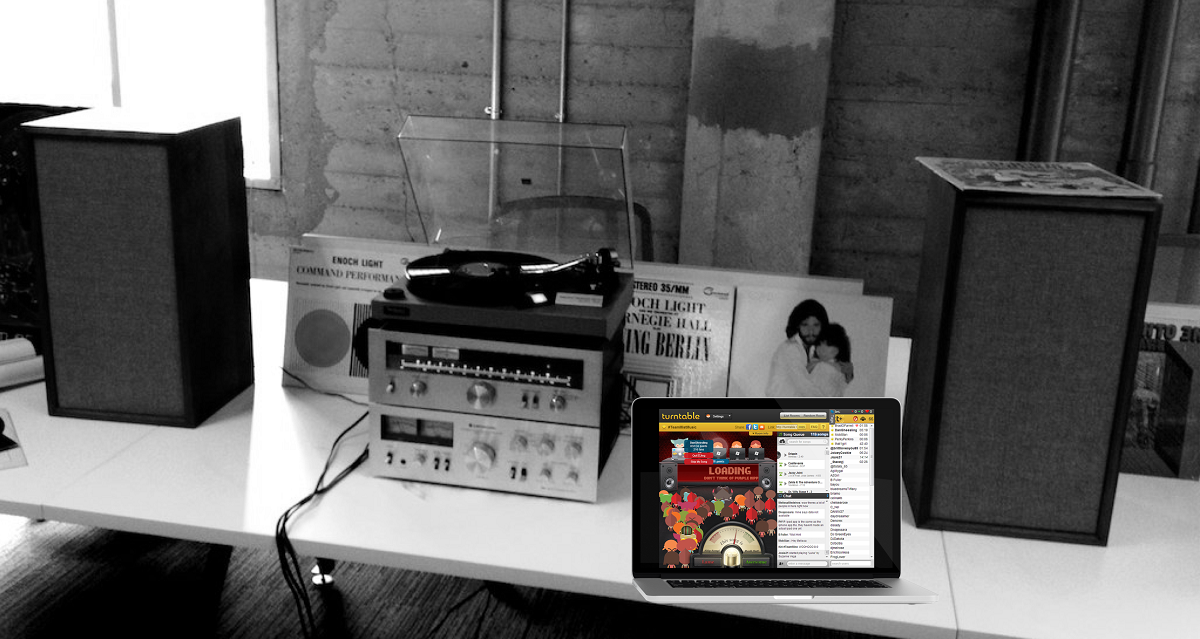
I bought a vintage stereo for 50 bucks off Craigslist, outfitted it with Bluetooth, and set it up in our Brannan St. office. Once we connected the whole workplace to daily live sessions inside (sadly now defunct) Turntable.FM, the mad music trivia games began — it increased office morale by approximately 8 million percent. And a great deal of work still got done. 🙂